Correlating In-Game Economy Fluctuations with Multiplayer Trading Behaviors in Persistent World Simulations
Written by Mia Coleman · Sep 28, 2026
Correlating In-Game Economy Fluctuations with Multiplayer Trading Behaviors in Persistent World Simulations
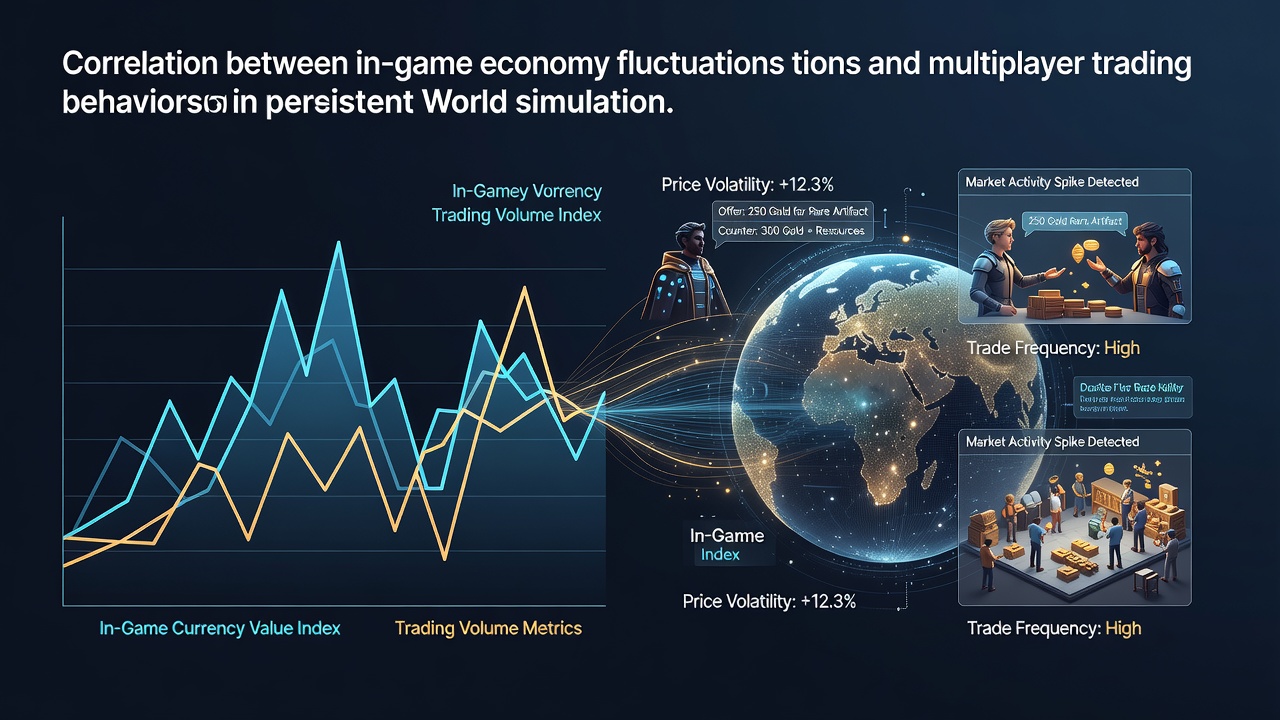
Persistent world simulations track player-driven economies through detailed logs of resource exchanges, currency movements, and market listings that update in real time, and researchers analyze these datasets to identify patterns between price shifts and collective trading actions across thousands of simultaneous participants. Data collection begins with server-side telemetry that records every transaction timestamp, item quantity, and participant identifier while preserving anonymity for individual accounts.
Data Collection Methods in Large-Scale Simulations
Teams aggregate transaction records from multiple simulation instances over extended periods, then normalize the figures against total player population counts to isolate genuine fluctuations from routine activity spikes. Automated scripts parse these logs into time-series formats that highlight correlations between sudden spikes in buy orders and corresponding drops in available supply across connected regions. Observers note that such normalization reveals recurring cycles where trading volume surges precede broader price adjustments by several hours or days depending on the simulation's auction house mechanics.
Additional layers include mapping player location data to trading hubs so analysts can determine whether localized clusters of activity drive global market changes or whether dispersed behaviors produce more gradual shifts. Researchers cross-reference these spatial patterns with external factors such as scheduled content updates or seasonal events that temporarily alter resource availability.
Identifying Correlations Between Fluctuations and Behaviors
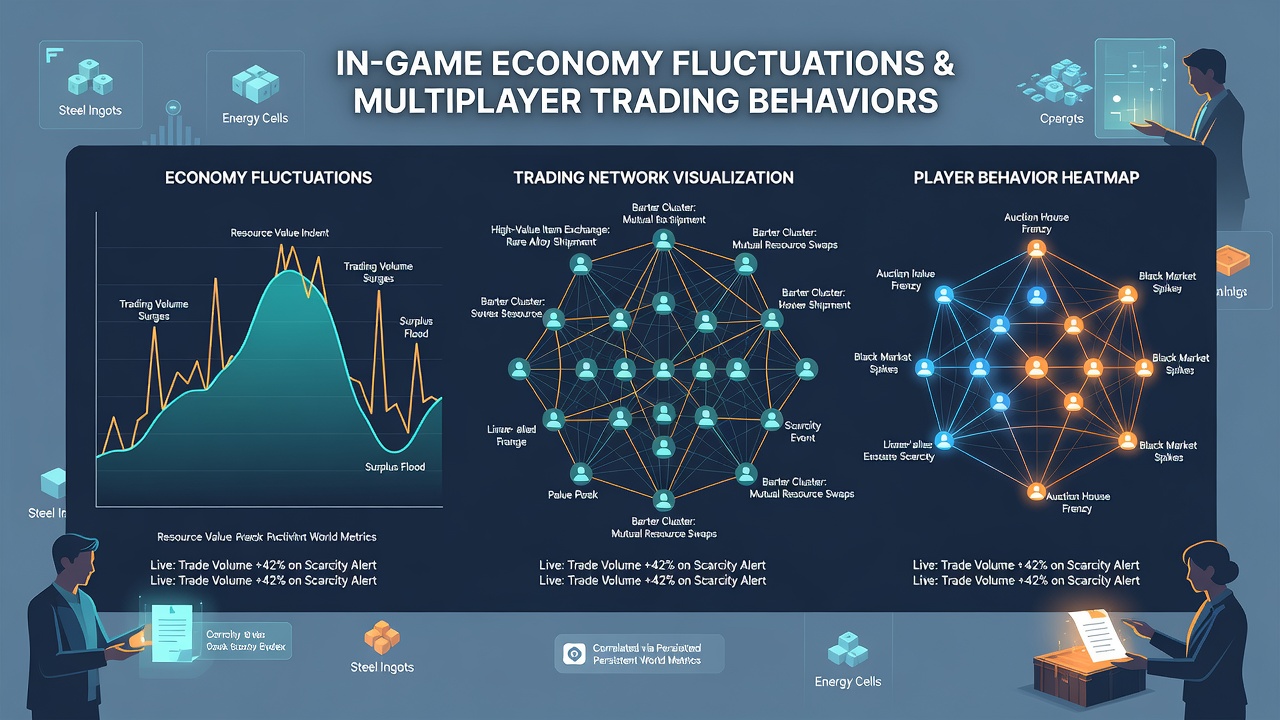
Statistical models apply regression analysis to paired datasets of price movements and trading frequency counts, revealing that rapid sell-offs often coincide with coordinated inventory dumps from large player groups who have accumulated excess stock through repeated farming cycles. These models also flag instances where speculative buying clusters form immediately after minor supply disruptions, amplifying price increases beyond what baseline scarcity would predict.
Figures from ongoing monitoring programs show that simulations with open trading interfaces experience more pronounced feedback loops, where visible price history encourages additional participants to enter or exit positions at accelerated rates. In contrast, simulations that obscure transaction details tend to exhibit slower propagation of behavioral changes across the player base.
Case Patterns Observed Across Multiple Titles
One documented pattern involves resource nodes that become contested during peak hours, leading to temporary shortages that trigger waves of preemptive purchasing by groups anticipating future demand. Tracking these sequences demonstrates how early movers can influence subsequent trading waves, creating measurable lags between initial price jumps and widespread adoption of similar strategies by other participants.
Another recurring observation centers on currency sinks introduced through game systems, where sudden removal of liquid assets prompts players to liquidate inventories in order to maintain spending power, and this liquidation phase often aligns with measurable dips in commodity prices across related categories. Analysts have tracked these events in simulations running continuously since the mid-2020s, noting that the September 2026 data sets displayed tighter correlations between sink activations and trading surges compared with earlier periods.
Analytical Tools and Validation Approaches
Machine learning classifiers sort trading sessions into categories such as speculative, consumptive, or hoarding behaviors based on duration, volume, and repetition patterns, then overlay these classifications onto economy fluctuation timelines to test predictive accuracy. Validation occurs through hold-out datasets drawn from separate simulation shards that were not used during initial model training, confirming whether identified correlations hold under varied population densities and rule variations.
According to research published by the Entertainment Software Association, persistent world economies generate transaction volumes comparable to mid-sized national markets when measured in equivalent real-world value, providing external benchmarks for scaling internal simulation data. A separate study from the Oxford Internet Institute examined longitudinal logs from multiple platforms and confirmed that behavioral clustering around price thresholds produces statistically significant deviations from random trading distributions.
Conclusion
Persistent world simulations continue to supply high-resolution datasets that link economy fluctuations directly to observable multiplayer trading sequences, and ongoing refinements in telemetry granularity allow increasingly precise mapping of cause-and-effect relationships within these digital marketplaces. Continued monitoring through 2026 and beyond will refine these correlations as new mechanics and player cohorts enter the simulations.