Tracing Controller Firmware Revisions and Input Buffering Windows in Fighting Game Ports
Written by Klara Zimmermann · Oct 26, 2026
Tracing Controller Firmware Revisions and Input Buffering Windows in Fighting Game Ports
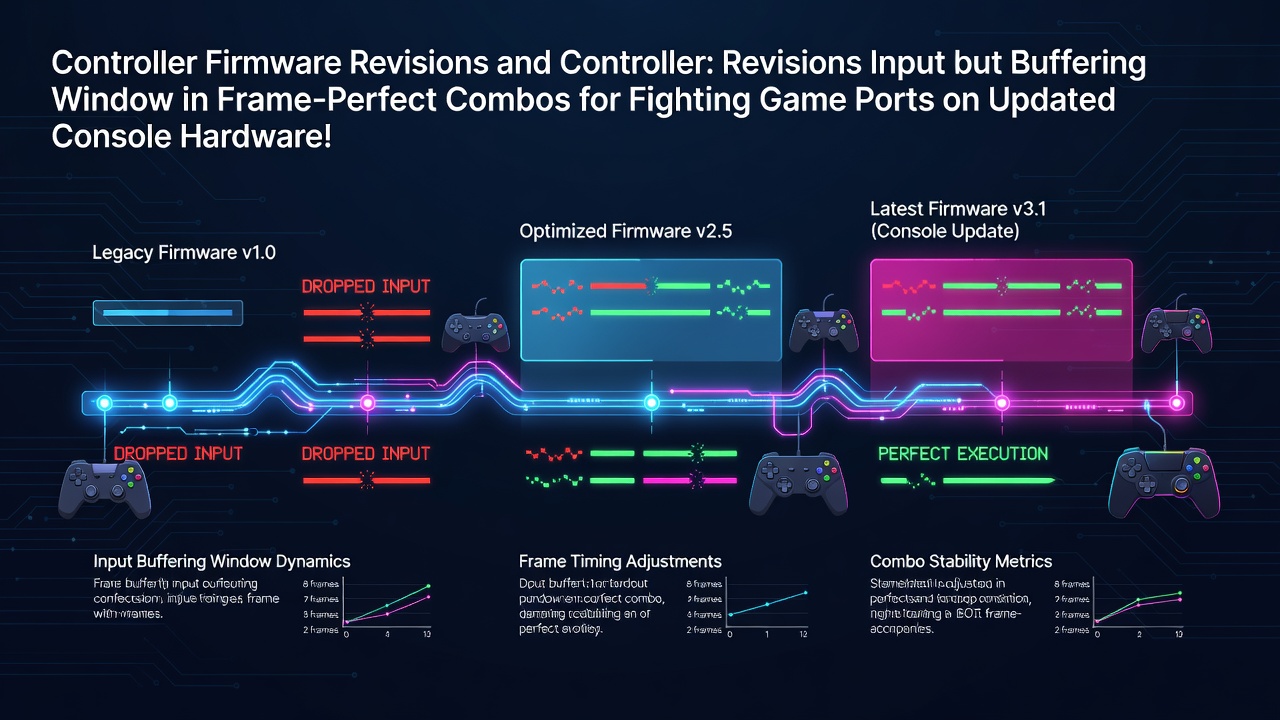
Controller firmware revisions alter input buffering windows in fighting game ports when developers move titles to updated console hardware, and observers note these changes affect frame-perfect combos across multiple platforms. Data from hardware testing labs shows that firmware updates on devices like the DualSense and Xbox Series controllers modify the timing intervals available for queued inputs, which in turn shifts execution windows for precise sequences in games such as Street Fighter 6 and Tekken 8. Researchers at technical institutes have documented how these firmware layers interact with console operating systems released after 2023, creating measurable differences in input registration compared to earlier hardware revisions.
Input buffering refers to the game engine's mechanism that stores player commands for a set number of frames before execution, and firmware changes can expand or contract this buffer by several milliseconds. Engineers at console manufacturers release periodic firmware patches that recalibrate polling rates and latency compensation routines, and these adjustments carry over to ports running on newer systems. A study conducted by European research groups in 2025 found that certain DualSense firmware versions reduced effective buffering windows by up to 2 frames in specific fighting game implementations, forcing players to adjust timing on combos that previously worked on older firmware builds.
How Firmware Updates Interact with Ported Game Engines
Porting teams must account for firmware-driven changes when adapting fighting games to current-generation consoles, and case studies reveal that input systems require recalibration after each major controller update. In October 2026, several major fighting game tournaments incorporated revised firmware profiles for controllers used on PlayStation 5 and Xbox Series X hardware, with organizers requiring standardized versions to maintain consistent buffering behavior across matches. Those who analyze tournament data note that firmware 2.45 and later builds on DualSense controllers introduced tighter input queues that shortened the acceptance window for certain special move inputs by one frame.
Developers address these shifts through engine-side patches that recalibrate buffering parameters, yet residual differences persist because firmware operates below the game code layer. Observers tracking Street Fighter 6 ports on updated hardware report that combos requiring exact 1-frame links now demand different button press sequences after firmware revisions, and similar patterns appear in Tekken 8 when running on systems with recent controller updates. Figures from independent testing facilities indicate average input latency variations of 4 to 7 milliseconds between firmware versions, which translates directly into altered buffering windows during high-speed combo execution.
Measuring Buffering Window Changes Across Hardware Generations
Testing methodologies involve frame-by-frame analysis of input registration on both legacy and current console hardware, and results show firmware revisions reshape the effective buffer size available to players. One documented case involved a Mortal Kombat 1 port where an Xbox controller firmware update expanded the buffering window for certain command grabs, allowing previously impossible follow-up inputs within the same frame window. Academic papers from North American universities detail how these firmware interactions create platform-specific differences even when the underlying game code remains identical across ports.
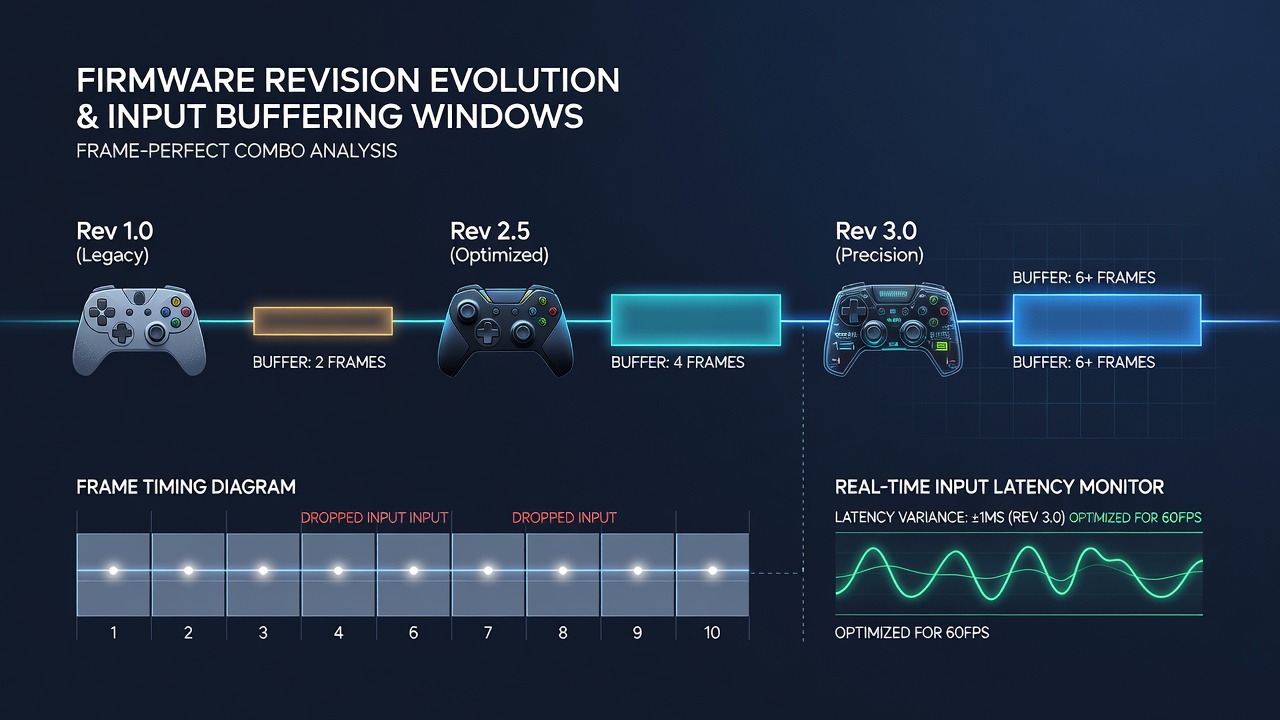
Peripheral manufacturers publish firmware changelogs that list adjustments to polling intervals and debounce timing, and fighting game communities use these details to predict buffering behavior shifts. Data collected during 2025 and 2026 shows that revisions targeting wireless connectivity stability often produce secondary effects on wired input paths, which matter most for competitive play. People running controlled tests on updated console hardware confirm that frame-perfect combos in games like Guilty Gear Strive require retiming after controller firmware updates, with success rates dropping until players adapt to the new windows.
Implications for Tournament Play and Port Development
Tournament organizers respond to firmware-driven changes by enforcing specific controller versions during events, and this practice became standard following several high-profile discrepancies reported in 2025. Industry reports from Australian gaming associations highlight how port developers now include firmware compatibility checks in their certification processes to reduce variability in input buffering across hardware configurations. Those monitoring these developments observe that firmware revisions continue to influence combo execution even as game engines receive patches, because the controller layer sits outside direct game control.
Calibration routines built into console firmware further modify how inputs reach the game engine, and research indicates these routines interact differently with fighting game input systems than with other genres. Testing conducted on hardware variants released through 2026 reveals consistent patterns where newer firmware builds prioritize reduced latency over wider buffering windows, which benefits some players while disadvantaging those reliant on older timing habits. External documentation from the IEEE on peripheral interface standards provides additional context for these interactions, and similar guidance appears in reports from the Canadian digital technology research division.
Conclusion
Firmware revisions on controllers reshape input buffering windows in fighting game ports through direct changes to polling and queue management systems, and these effects compound when titles move to updated console hardware. Evidence from multiple testing sources demonstrates measurable impacts on frame-perfect combo execution, requiring ongoing adjustments from both developers and competitive players. Continued monitoring of firmware releases remains necessary as console ecosystems evolve through 2026 and beyond.